
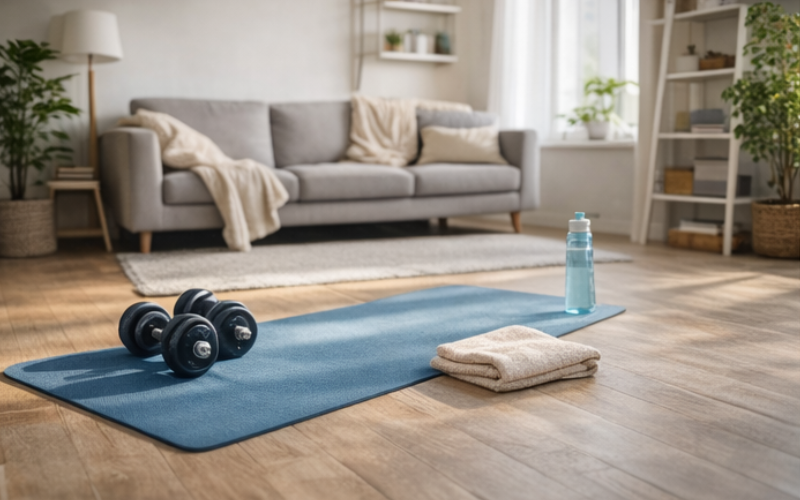
Starting a fitness routine often feels harder than actually doing the exercise. Many people believe they need special equipment, strict schedules, or intense workouts to see results. In reality, the most effective fitness routine is one that is simple, realistic, and easy to maintain over time.
This guide is designed for everyday people who want to move more, feel better, and build a lasting habit—without pressure, confusion, or gym dependency. If consistency has been your biggest challenge, you’re in the right place.
Table of Contents
ToggleWhy Simple Fitness Routines Work Best
A simple routine removes common barriers like lack of time, motivation, or energy. When fitness feels manageable, you’re far more likely to stick with it.
Simple routines:
- Fit easily into daily life
- Require less mental effort
- Reduce burnout and overwhelm
- Encourage long-term consistency
The goal isn’t perfection—it’s progress through regular movement.
Step 1: Start With a Clear, Realistic Goal
Before you begin, it’s important to know why you want to be active. Your goal doesn’t need to be dramatic or complicated.
Examples of Simple Fitness Goals
- Move my body at least 20 minutes a day
- Walk more during the week
- Feel less stiff and more energetic
- Build a daily movement habit
Keep your goal personal and achievable. Small goals create momentum.
Step 2: Choose Activities You Actually Enjoy
One of the biggest reasons people quit fitness routines is because they force themselves into activities they don’t like.
Fitness doesn’t have to be boring or exhausting.
Beginner-Friendly Activity Options
- Walking outdoors or indoors
- Light stretching or mobility routines
- Bodyweight exercises
- Dancing at home
- Yoga or slow flow movements
When you enjoy the activity, consistency comes naturally.
Step 3: Create a Routine That Fits Your Schedule
Your routine should work with your life—not against it.
How to Find the Right Time
- Morning: energizing start to the day
- Afternoon: movement break from work
- Evening: stress relief and relaxation
Even 10–15 minutes is enough to begin. You can always increase later.
Sample Weekly Simple Fitness Routine
| Day | Activity | Time |
|---|---|---|
| Monday | Brisk walking | 20 minutes |
| Tuesday | Stretching + mobility | 15 minutes |
| Wednesday | Bodyweight exercises | 20 minutes |
| Thursday | Light walking | 15 minutes |
| Friday | Stretching or yoga | 15 minutes |
| Weekend | Free movement (play, chores, walks) | Flexible |
This kind of routine is easy to adjust and repeat week after week.
Step 4: Keep Your Routine Extremely Simple
A common mistake is doing too much too soon. Simplicity builds consistency.
A Basic No-Equipment Routine
- March in place – 1 minute
- Squats or chair sit-stands – 30 seconds
- Wall push-ups – 30 seconds
- Standing stretches – 1 minute
Repeat 2–3 times at your own pace.
Step 5: Focus on Consistency, Not Intensity
Consistency always matters more than intensity, especially at the beginning.
Instead of asking:
- “Did I work out hard enough?”
Ask:
- “Did I show up today?”
Showing up regularly builds confidence and habit strength.
How to Stay Consistent Long-Term
Consistency is the real challenge—and the real win.
Practical Tips to Stay on Track
- Keep workouts short
- Set reminders or alarms
- Lay out clothes or shoes in advance
- Track simple progress (days moved, minutes active)
- Celebrate small wins
Missed a day? No problem. Just start again the next day.
Build Fitness Into Daily Life
Not all movement has to look like exercise.
Everyday Movement That Counts
- Walking while on phone calls
- Taking stairs
- Cleaning with intention
- Playing with kids or pets
- Stretching during TV time
All movement supports an active lifestyle.
Common Mistakes That Break Consistency
| Mistake | Better Approach |
|---|---|
| Starting too intense | Begin slow and build |
| Comparing to others | Focus on your own pace |
| Waiting for motivation | Build routine first |
| Skipping warm-ups | Prepare your body gently |
Avoiding these mistakes makes fitness feel sustainable.
Using Simple Tools for Support
Technology can help—if used wisely.
Helpful (Not Overwhelming) Tools
- Step counters
- Calendar reminders
- Free beginner workout videos
- Simple habit-tracking apps
Choose tools that encourage, not pressure you.
Frequently Asked Questions (FAQs)
1. How long should a beginner fitness routine be?
Start with 10–20 minutes. Consistency matters more than duration.
2. Do I need to exercise every day?
Daily movement is helpful, but light days are just as important as active days.
3. What if I miss a few days?
That’s normal. Restart without guilt—progress isn’t ruined.
4. Can I build a routine without equipment?
Yes. Bodyweight exercises and walking are enough to start.
5. How do I stay motivated?
Choose activities you enjoy, keep goals realistic, and track progress simply.
6. Is walking alone enough?
Walking is a strong foundation. Adding light strength and stretching improves balance.
Final Thoughts
Starting a fitness routine doesn’t require a complete lifestyle change. It begins with small, intentional steps that fit naturally into your day. When fitness feels simple and flexible, it becomes something you do, not something you avoid.
Conclusion
A simple fitness routine is one you can repeat—even on busy or low-energy days. By starting small, choosing enjoyable activities, and focusing on consistency, you create a habit that lasts.
Remember: progress comes from showing up regularly, not from doing everything perfectly. One step, one stretch, one walk at a time is more than enough to build an active, healthier lifestyle.
